We're currently upgrading our system, checkout will be back soon.

U
By Katy Samuels


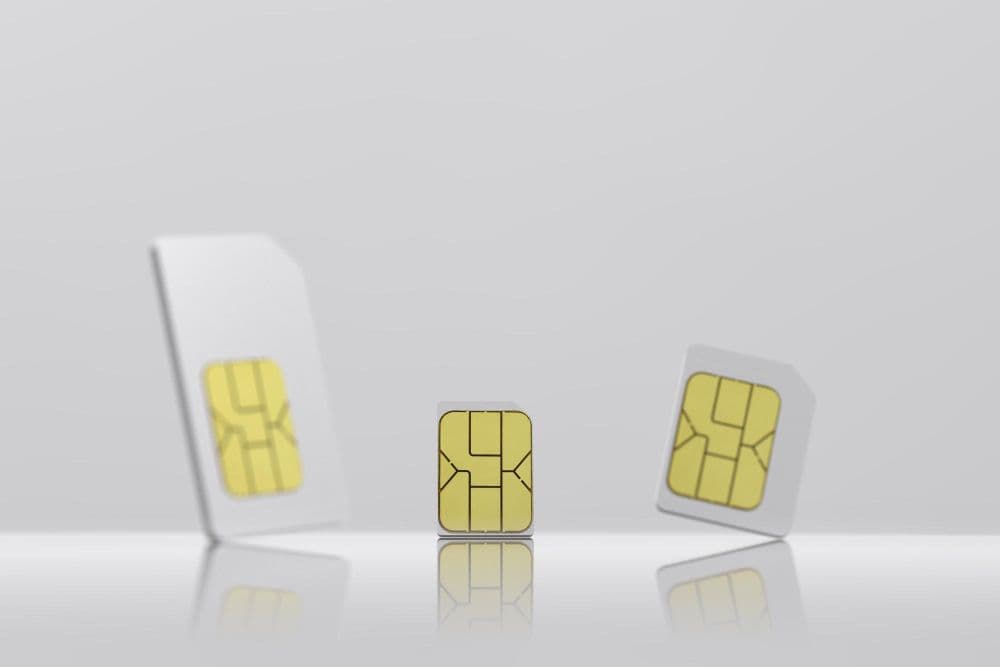
If you've ever wondered about those tiny chips in your phone or what all the fuss is about eSIM technology, you're not alone. Let's explore how SIM cards have evolved and what this means for your mobile experience today.
Remember flip phones and those credit card-sized SIM cards? The Subscriber Identity Module, or SIM, has come a long way since then. Its job has always been to securely store the information that identifies you to your mobile network, letting you make calls, send texts, and browse the internet. Think of it as your phone's passport to the cellular network.
As phones became sleeker, SIM cards followed suit. This wasn't just about making things look nicer. Each size reduction freed up valuable space inside your phone for bigger batteries, better cameras, and more powerful processors.
The original SIM card was literally the size of a credit card. While you won't find these in modern smartphones, they were the standard for early mobile phones. It was a simpler time when phones were mainly for calls and texts, and the idea of carrying a computer in your pocket seemed like science fiction.
As phones began to shrink, the Mini SIM emerged. This was about half the size of the original and became the standard for many years. You might still find these in older feature phones or some specialized devices. The Mini SIM made more compact phone designs possible while keeping things compatible with existing technology.
The Micro SIM took things further, roughly half the size of a Mini SIM. Apple famously adopted it for the iPhone 4, and other manufacturers quickly followed. This size reduction was crucial as smartphones started packing in more advanced features like better cameras, faster processors, and larger batteries, all while getting thinner and lighter.
The Nano SIM is what you'll find in most modern smartphones. It's incredibly tiny, essentially just the chip itself with minimal plastic around it. When you buy a new phone today, it almost certainly uses a Nano SIM. Its small footprint allows manufacturers to maximize internal space for the features you actually use.
Every millimeter saved inside your phone can be used for something that improves your experience: longer battery life, better cameras, faster performance, or simply a slimmer device that fits comfortably in your pocket or purse. For busy parents juggling multiple responsibilities, having a reliable, long-lasting phone isn't just convenient—it's essential.
Now here's where things get interesting. An eSIM (embedded SIM) isn't a physical card at all. Instead, it's a chip already built into your device during manufacturing. Rather than swapping out a physical card when you want to change carriers or plans, you activate an eSIM digitally.
When you sign up for a mobile plan with an eSIM-compatible carrier, they provide a QR code or activation code. You scan the code with your phone or enter it, and your device connects to the network. That's it. No waiting for cards in the mail, no fumbling with tiny trays and tinier cards, no wondering if you inserted it correctly.
Activation is instant and digital. No physical cards to wait for or install.
Switching between carriers or plans becomes remarkably simple. This is particularly valuable for travelers who want to activate local plans without hunting down a store in an unfamiliar country.
Many modern phones support both a physical SIM slot and eSIM. This means you can have two active phone numbers on one device, perfect for separating work and personal calls, or maintaining your primary number while using a local number when traveling. For families, this might mean a dedicated line for school communications alongside your personal number.
Without needing a physical SIM tray, manufacturers can use that space for other components or make devices even more compact.
eSIMs are integrated into the device, making them more difficult to tamper with or lose compared to removable cards.
Travelers can easily switch to local plans abroad, avoiding expensive roaming charges. Business professionals can maintain separate work and personal numbers on a single device. Families can manage multiple lines with greater ease and flexibility.
The real advantage of modern connectivity often comes from "Dual SIM/eSIM Technology," which allows your phone to support two active network connections simultaneously. This could be two physical SIMs (less common now), one physical SIM and one eSIM, or even two eSIMs.
Traditional mobile carriers typically focus on connectivity alone, often nickel and diming customers with separate charges for basic features. If you want comprehensive digital security, that usually comes as an expensive add-on, if it's available at all.
Every plan includes Aura-powered identity theft protection with up to $5 million insurance coverage, something unprecedented in the prepaid carrier space.
This means you get comprehensive features like dark web monitoring, credit surveillance across all three bureaus, VPN and antivirus protection, spam call blocking, and parental controls included with your mobile service. For families, plans can protect up to 10 adults and unlimited children under one security umbrella.
Beyond security, VLE Mobile is the only prepaid carrier offering automatic triple network access, seamlessly switching between AT&T, Verizon, and T-Mobile equivalent networks for optimal coverage. Plans also include unlimited data rollover (so you never lose what you don't use), free global roaming in over 80 countries perfect for that dual SIM flexibility, and no contracts.
Starting at $25 monthly, these plans combine competitive pricing with features that other carriers charge extra for or don't offer at all. For families looking to balance comprehensive mobile connectivity with robust digital protection, this integrated approach addresses two critical needs in one straightforward package.
Understanding the differences between traditional SIM cards, Nano SIMs, and eSIMs helps you make better decisions about devices and services. As eSIM technology becomes more common, your next phone might offer flexibility and convenience you didn't know you were missing.
The mobile landscape continues to evolve, with technology becoming both more sophisticated and, paradoxically, easier to use. Whether you're managing a family's connectivity needs, traveling frequently, or simply want hassle-free service, knowing your options makes all the difference.
As you consider your next phone or plan, check what SIM technology it supports and think about how features like dual SIM capability or eSIM flexibility might fit your lifestyle. The right combination of technology and service can make staying connected simpler, more secure, and more affordable than you might expect.
Stay informed about mobile technology and digital security.


Stay updated with our latest news and offers!