We're currently upgrading our system, checkout will be back soon.

U
By Katy Samuels


Remember when switching phone carriers meant carefully popping out a tiny SIM card and hoping you wouldn't lose it? Those days are rapidly becoming history. Mobile technology has evolved dramatically, and Dual SIM and eSIM technologies are changing how we stay connected. Let's explore what these innovations mean for you and how they can make your mobile life easier.
Before we get into the newer technology, here's a quick refresher. SIM stands for Subscriber Identity Module. It's that small chip in your phone that stores your mobile subscriber identity and authenticates you to your carrier's network. Think of it as your phone's ID card that tells the network who you are and which service you're using.
Dual SIM capability means your phone can hold two SIM cards at once, giving you two active phone numbers on a single device. This isn't a new feature, but it's become increasingly popular and useful.
Most dual SIM phones use what's called Dual SIM Dual Standby (DSDS). Both SIM cards stay active and can receive calls or texts, but when you're actively using one—like taking a call—the other temporarily goes inactive. There's also Dual SIM Dual Active (DSDA), which is less common but allows both SIMs to work simultaneously, meaning you could theoretically be on two calls at once.
There are several practical reasons why someone might want dual SIM functionality:
Many people appreciate having distinct numbers for professional contacts and personal ones without juggling two devices. Your boss doesn't need to call your personal line, and your friends don't need your work number.
International travelers often keep their primary number active for important contacts while adding a local SIM for affordable data and calls in whatever country they're visiting. This strategy can save substantial money compared to international roaming charges.
If your area has unreliable coverage from one carrier, you can maintain a backup SIM from another provider. Though this becomes less critical when you have a carrier that automatically switches between multiple networks for optimal signal.
Some users dedicate one SIM to data-heavy activities with a specific plan while keeping another for calls and texts with a different rate structure.
While Dual SIM brought added convenience, eSIM technology takes things further by removing the physical card entirely. An eSIM (embedded SIM) is a tiny chip built directly into your device's motherboard. Instead of inserting or swapping physical cards, everything happens digitally.
Activating an eSIM is remarkably straightforward. When you want service, you simply download your carrier's profile onto the eSIM, usually by scanning a QR code or entering an activation code. The entire process happens in minutes without any physical components to handle.
Changing carriers or plans becomes almost instant. There's no waiting for a physical SIM to arrive by mail or making a trip to a store.
Adding a local data plan while abroad is incredibly simple with eSIM. You can store multiple eSIM profiles on compatible devices and switch between them as needed, making international connectivity almost effortless.
Removing the physical SIM card slot gives device manufacturers additional internal space, potentially allowing for larger batteries or additional features.
Since eSIMs can't be physically removed or stolen from a device, they offer better protection against certain types of fraud and theft.
Beyond phones, eSIM technology is making it easier to manage connections for smartwatches, fitness trackers, and other connected devices.
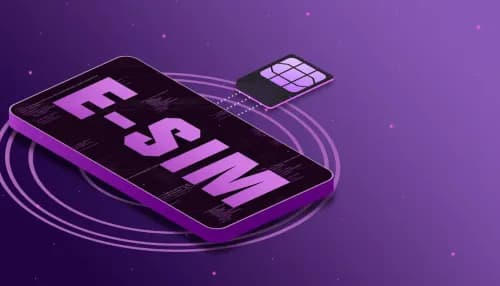
Many current smartphones offer both a traditional SIM card slot and eSIM capability, giving users maximum flexibility. This hybrid approach opens up interesting possibilities for how you manage your mobile connectivity.
The real power of Dual SIM and eSIM shines when combined with innovative carrier features. For instance, some providers now offer automatic access to multiple major networks, which means your phone intelligently switches between AT&T, Verizon, and T-Mobile equivalent towers for the best available signal. This approach reduces the need to maintain multiple SIMs purely for coverage purposes.
Beyond connectivity, forward-thinking mobile services are bundling comprehensive digital security into their plans. Features like identity theft protection with substantial insurance coverage, dark web monitoring, credit surveillance, VPN services, antivirus protection, spam call blocking, and parental controls are becoming standard rather than add-ons.
The flexibility extends to plan structures as well. No-contract arrangements give you the freedom to experiment with different Dual SIM and eSIM configurations without long-term commitments. Whether you're testing international data options or trying different number setups, this flexibility lets you adapt as your needs change.
Consider whether any of these situations apply to your life:
Mobile technology continues advancing rapidly, and Dual SIM and eSIM capabilities represent significant steps forward in user flexibility and convenience. Understanding how these technologies work helps you take fuller control of your mobile experience.
The mobile landscape is shifting toward carriers that think beyond basic connectivity.
When providers bundle identity theft protection worth hundreds of dollars annually, include international roaming at no extra cost, offer unlimited data carryover, and maintain no-contract freedom, the value proposition becomes compelling.
For anyone evaluating their mobile options, VLE Mobile deserves consideration. They're combining triple network access with industry-leading Aura-powered security features on every plan, offering up to $5 million in identity theft insurance, and doing it at prices that compete with basic prepaid carriers. Their approach to bundling premium connectivity, comprehensive digital protection, and international flexibility into accessible plans addresses what many people actually need from their mobile service.
The future of mobile connectivity is about more than just bars on your signal indicator. It's about flexibility, security, and having the right tools to manage your increasingly digital life. Dual SIM and eSIM technologies give you options, and choosing a carrier that maximizes those capabilities while protecting your digital identity makes practical sense.
Stay informed about mobile technology and digital security.


Stay updated with our latest news and offers!